
Winter Food Safety: Why Bacteria Love Cold Weather Too
When winter arrives, many people feel a sense of relief when it comes to food safety. Cooler temperatures, fewer insects, and less outdoor cooking often create the impression that foodborne illnesses are mainly a summer problem. Unfortunately, this belief can be misleading - and even dangerous. The truth is simple but surprising: cold weather does not eliminate bacteria. In fact, winter creates its own unique food safety risks, especially at home. From overloaded refrigerators and long-lasting leftovers to improper reheating and thawing, colder months can quietly increase the chances of foodborne illness. Understanding why bacteria still thrive in winter and how to prevent them - is an essential step toward keeping your household safe and healthy all year long.
1/4/20263 min read
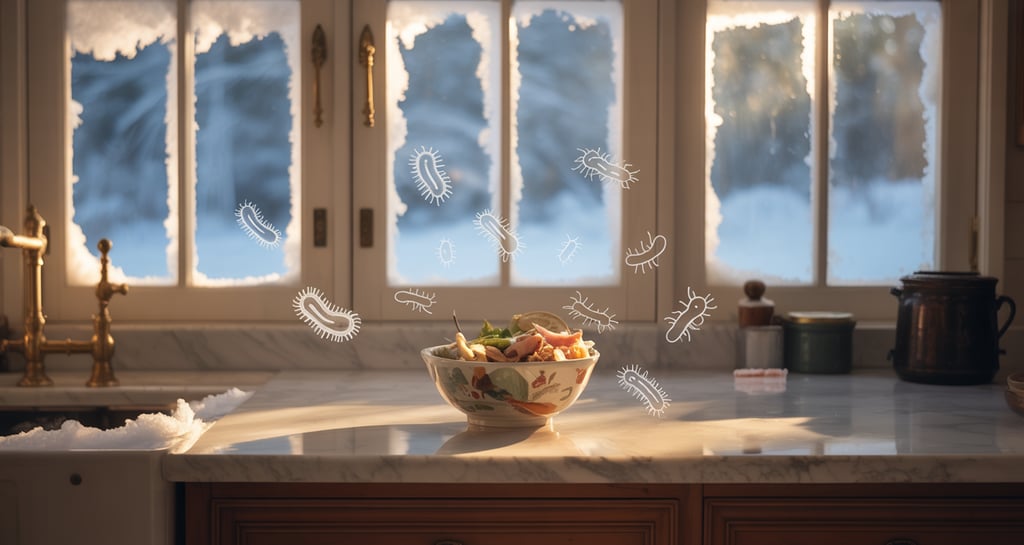
Cold Weather Does Not Kill Bacteria
One of the most common food safety myths is that cold temperatures kill bacteria. While freezing and refrigeration slow bacterial growth, they do not destroy most harmful microorganisms.
Many bacteria simply become inactive in cold conditions and reactivate once food warms up. This means food that looks, smells, and tastes normal can still carry dangerous bacteria.
Some bacteria are especially well adapted to cold environments:
Listeria monocytogenes can grow at refrigerator temperatures
Salmonella can survive freezing
E. coli can remain dormant and become active again during reheating
Because these bacteria are invisible, relying on smell, taste, or appearance is not enough to determine food safety.
Why Winter Increases Food Safety Risks
Winter changes the way we cook, store, and consume food - often without realizing it. These changes can create ideal conditions for bacteria.
1. Overcrowded Refrigerators
During winter holidays and colder months, refrigerators tend to be fuller than usual. Large meals, leftovers, party platters, and bulk groceries all compete for space.
When refrigerators are overcrowded:
Cold air cannot circulate properly
Temperatures become uneven
Some areas stay warmer than others
This can allow bacteria to grow, even if the fridge is technically “cold.”
2. More Leftovers, Stored Longer
Winter meals often include soups, stews, casseroles, sauces, and roasted meats - foods that are commonly prepared in large quantities.
Common mistakes include:
Leaving food out too long to cool
Storing leftovers in deep containers
Keeping leftovers “just one more day”
These habits significantly increase the risk of bacterial growth.
3. False Sense of Safety Indoors
Cold weather often leads people to believe food is safer sitting out for longer periods, especially in cooler rooms. However, indoor heating keeps most homes well within the danger zone for bacterial growth (between 5°C and 60°C / 41°F–140°F).
4. Improper Reheating
Comfort foods are often reheated multiple times during winter. If food is only warmed instead of heated thoroughly, bacteria can survive - and multiply.
Winter Foods That Need Extra Attention
Certain foods are especially risky during colder months due to how they are prepared, stored, and reheated.
Soups and Stews
Often cooked in large pots
Cool slowly if not divided properly
Frequently reheated multiple times
Cooked Meats and Poultry
Roasts, turkey, chicken, and gravies
Can harbor bacteria if not cooled or reheated correctly
Cooked Rice and Pasta
Can grow bacteria even after cooking
Risk increases if left at room temperature
Ready-to-Eat Foods
Deli meats
Soft cheeses
Pre-packaged salads
These foods are particularly concerning for pregnant women, young children, older adults, and people with weakened immune systems.
🚫 Common Winter Food Safety Mistakes
Even well-intentioned home cooks can unknowingly make mistakes during colder months.
❌ Letting Food Cool Too Long
Hot food should not be left out for extended periods to “cool naturally.” Bacteria multiply rapidly as food passes through the danger zone.
❌ Thawing Food on the Counter
Frozen meat or poultry left on the counter may thaw on the outside while remaining frozen inside - creating perfect conditions for bacteria on the surface.
❌ Reheating Only Until Warm
Food should be reheated until steaming hot throughout, not just warm enough to eat.
❌ Ignoring Refrigerator Temperature
Many home refrigerators operate above safe temperatures without owners realizing it.
The Importance of Proper Temperatures
Temperature control is one of the most powerful tools in food safety.
Safe Temperature Guidelines
Refrigerator: 4°C (40°F) or below
Freezer: -18°C (0°F)
Hot food holding: above 60°C (140°F)
Using a fridge thermometer is one of the simplest ways to improve food safety - especially during winter when fridges are often overfilled.
✅ Practical Winter Food Safety Tips
Here are simple, effective habits anyone can follow — even beginners.
Clean
Wash hands before and after handling food
Clean kitchen surfaces regularly
Sanitize cutting boards and utensils
Separate
Keep raw meat separate from ready-to-eat foods
Use different cutting boards for raw and cooked foods
Cook
Cook food to safe internal temperatures
Avoid partially cooking food and finishing later
Chill
Refrigerate leftovers within 2 hours
Within 1 hour if the room is warm
Divide large portions into shallow containers
Food Safety for Families and Children
Winter means more time spent indoors - and often more children helping in the kitchen. This is a wonderful opportunity to teach lifelong food safety habits.
Simple rules kids can learn:
Wash hands before cooking
Do not taste food while preparing it
Use clean utensils
Tell an adult if food falls on the floor
Teaching children these habits early helps protect the whole family and builds responsibility.
Why Foodborne Illness Is Often Misdiagnosed in Winter
Many people associate winter illnesses with colds or flu, but foodborne illness symptoms — such as nausea, vomiting, stomach cramps, and diarrhea — are often mistaken for seasonal viruses.
As a result:
Food safety issues go unnoticed
Risky habits continue
Illness spreads within households
Being aware that foodborne illness happens year-round is essential for prevention.
Special Risk Groups in Winter
Some people need extra protection during colder months:
Pregnant women
Infants and young children
Older adults
People with weakened immune systems
For these groups, avoiding high-risk foods and following strict food safety practices is especially important.
Simple Winter Food Safety Checklist
✔️ Fridge temperature checked
✔️ Leftovers labeled with dates
✔️ Food reheated until steaming
✔️ Frozen food thawed safely
✔️ Kitchen surfaces cleaned daily
Small habits make a big difference.
Cold Outside Doesn’t Mean Safe Inside
Winter may slow bacteria, but it does not stop them. In fact, the habits we develop during colder months - more leftovers, crowded refrigerators, and repeated reheating - can increase the risk of foodborne illness if we’re not careful.
By understanding how bacteria behave in cold weather and following simple food safety rules, you can protect yourself and your family throughout the winter and beyond.
Food safety isn’t seasonal - it’s year-round protection.
Stay informed!
Subscribe to get the latest food safety tips!
© 2025. All rights reserved.
hello@foodsafetybase.com