Why Taste Can’t Tell You If Food Is Safe
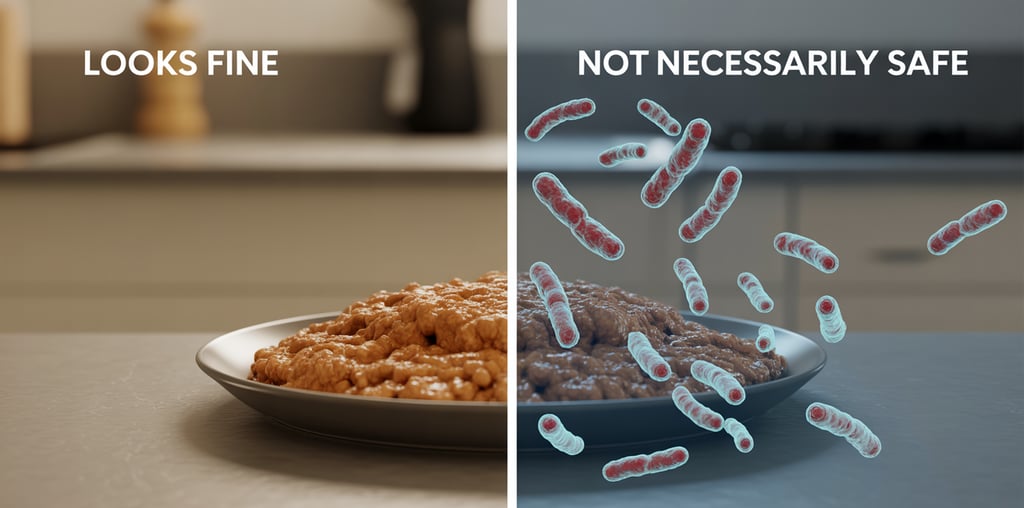
Many people rely on their senses to judge whether food is safe to eat. If it looks normal, smells fine, and tastes okay, it must be safe-right? Unfortunately, this belief is one of the most common and dangerous food safety myths. In reality, taste cannot tell you if food is safe, and relying on it can increase the risk of foodborne illness for you and your family. Food safety isn’t about flavor-it’s about bacteria, time, temperature, and proper handling. In this article, we’ll explain why food can taste perfectly fine and still be unsafe, which bacteria are involved, and what you should rely on instead to protect your health.
1/13/20263 min read
Why Taste Can’t Tell You If Food Is Safe
Many people rely on their senses to judge whether food is safe to eat. If it looks normal, smells fine, and tastes okay, it must be safe-right?
Unfortunately, this belief is one of the most common and dangerous food safety myths. In reality, taste cannot tell you if food is safe, and relying on it can increase the risk of foodborne illness for you and your family.
Food safety isn’t about flavor-it’s about bacteria, time, temperature, and proper handling. In this article, we’ll explain why food can taste perfectly fine and still be unsafe, which bacteria are involved, and what you should rely on instead to protect your health.
Harmful Bacteria Don’t Always Change Taste or Smell
One of the biggest misconceptions about foodborne illness is that contaminated food always smells bad or tastes spoiled. While some types of spoilage do cause unpleasant odors or flavors, many harmful bacteria do not.
Pathogens such as:
· Salmonella
· Listeria monocytogenes
· E. coli
· Campylobacter
· Staphylococcus aureus
can be present in food without changing its taste, smell, or appearance at all.
These bacteria don’t announce themselves. Food may look fresh, smell normal, and taste completely fine-yet still contain enough bacteria to cause illness. This is why sensory checks alone are unreliable and unsafe.
Why “Just a Taste” Can Still Make You Sick
Some people take a small bite of food to check if it’s still good. This is risky because it only takes a small amount of contaminated food to cause illness.
Foodborne bacteria don’t need time to “build up” inside your body after tasting. Once ingested, they can begin causing symptoms hours or days later. For certain groups-such as:
· young children
· pregnant women
· older adults
· people with weakened immune systems
even small exposure can lead to serious complications.
Tasting food is not a safety test. It’s a gamble.
Cold Weather and Refrigeration Don’t Kill Bacteria
Another common myth is that cold temperatures make food safe. While refrigeration and winter weather can slow bacterial growth, they do not kill bacteria.
Some bacteria, especially Listeria, can survive and even grow at refrigerator temperatures. This means that food stored too long in the fridge can become unsafe-even if it looks and tastes fine.
Freezing can pause bacterial growth, but it doesn’t destroy bacteria either. Once food is thawed, bacteria can become active again, especially if the food is left at room temperature.
Cold slows bacteria.
It does not eliminate the risk.
Why Foodborne Illness Is Often Missed or Misdiagnosed
Foodborne illness is frequently mistaken for the flu or a stomach bug. Symptoms such as nausea, vomiting, diarrhea, abdominal cramps, and fever can appear hours or even days after eating contaminated food.
Because:
· the food tasted fine
· symptoms are delayed
· people don’t remember exactly what they ate
many cases of foodborne illness are never linked back to food.
This delay makes taste-based judgment even more unreliable.
Foods That Often Taste Fine but Can Be Unsafe
Certain foods are especially risky because they can harbor bacteria without showing obvious signs of spoilage:
· Cooked leftovers kept too long
· Deli meats and soft cheeses
· Undercooked meat, poultry, or eggs
· Unwashed fruits and vegetables
· Ready-to-eat foods past recommended storage time
· Food left out at room temperature for more than two hours
These foods may taste normal but still pose a risk if not handled or stored correctly.
Spoilage vs. Safety: They Are Not the Same Thing
It’s important to understand the difference between spoilage and food safety.
· Spoilage bacteria cause food to smell bad, look moldy, or taste sour.
· Pathogenic bacteria cause illness and often show no visible signs.
Food can be unsafe without being spoiled, and spoiled food is not always the most dangerous. This is why relying on taste or smell alone can be misleading.
What Actually Determines Food Safety
Instead of trusting your senses, rely on proven food safety practices:
✔ Time
Follow recommended storage times for refrigerated and frozen foods.
✔ Temperature
· Keep cold foods below 40°F (4°C)
· Keep hot foods above 140°F (60°C)
✔ Cooking
Use a food thermometer to ensure foods reach safe internal temperatures.
✔ Storage
Store food in airtight containers and avoid cross-contamination.
✔ The “When in Doubt, Throw It Out” Rule
If you don’t know how long food has been stored or how it was handled, it’s safer to discard it.
Why Trusting Taste Is a Risk You Don’t Need to Take
Foodborne illness can range from mild discomfort to severe, life-threatening conditions. While throwing away food can feel wasteful, medical bills, lost workdays, and long-term health effects are far more costly.
Taste is designed to help us enjoy food-not protect us from invisible bacteria.
The Bottom Line
Food can taste perfectly fine and still be unsafe to eat.
Taste, smell, and appearance are not reliable indicators of food safety.
The safest approach is to rely on:
· proper storage
· correct temperatures
· safe handling practices
· clear food safety guidelines
When it comes to food safety, caution is not overreacting-it’s protecting yourself and the people you care about.
Stay informed!
Subscribe to get the latest food safety tips!
© 2025. All rights reserved.
hello@foodsafetybase.com