
Top 10 Food Safety Tips for Your New Year’s Eve Feast
New Year’s Eve is a time for celebration-friends, family, laughter, and, of course, delicious food. Whether you’re hosting a big party or a cozy family dinner, keeping your feast safe is essential. After all, nothing ruins a holiday faster than foodborne illness. From appetizers to desserts, careful handling can make all the difference. To help you enjoy the festivities worry-free, here are our top 10 practical food safety tips for your New Year’s Eve celebration.
12/20/20253 min read
1. Wash Hands Thoroughly and Often
The first and simplest rule of food safety starts with your hands. Wash them with warm water and soap for at least 20 seconds before handling any food, after touching raw ingredients, and after sneezing, coughing, or touching your face. Encourage guests to wash their hands before sampling snacks or drinks. Clean hands are the first line of defense against germs and contamination.
2. Keep Raw and Cooked Foods Separate
Cross-contamination is a common cause of foodborne illness. Always use separate cutting boards, knives, and utensils for raw meats, seafood, or poultry and for ready-to-eat foods. In the fridge, store raw meats on the bottom shelf to prevent their juices from dripping onto other items. This simple step can prevent harmful bacteria from spreading throughout your meal.
3. Cook Foods to the Right Temperature
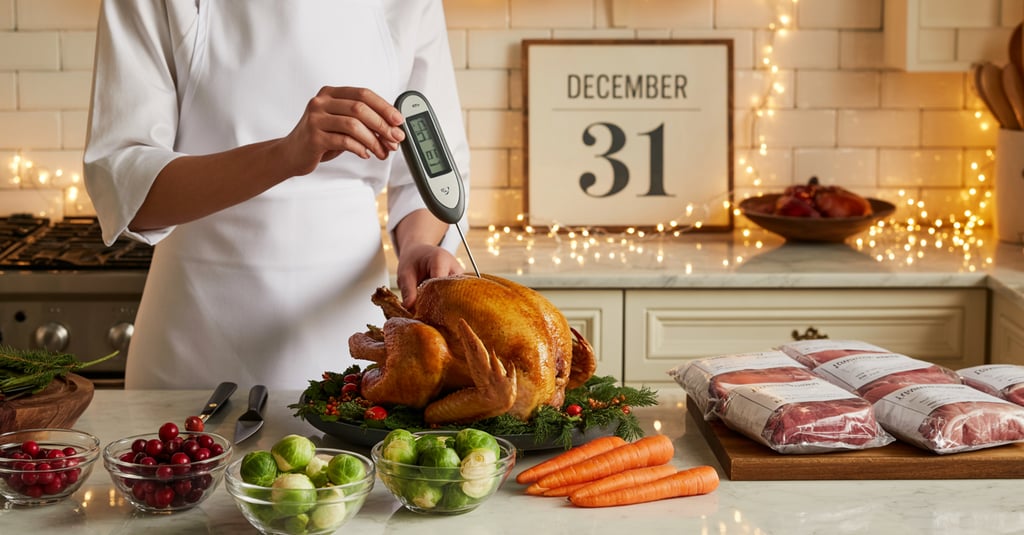
Proper cooking is crucial for eliminating harmful bacteria. Use a food thermometer to ensure that meats reach safe internal temperatures:
Poultry: 165°F (74°C)
Ground meats: 160°F (71°C)
Seafood: 145°F (63°C)
Remember, visual cues like color or texture aren’t enough-always check with a thermometer for safety.
4. Store Perishables Promptly
Time is of the essence when it comes to keeping foods safe. Refrigerate or freeze leftovers within two hours of cooking (or within one hour if the room is particularly warm). Cold foods should stay below 40°F (4°C) and hot foods above 140°F (60°C). Quick storage prevents bacteria from multiplying and ensures your dishes remain safe to eat.
5. Chill and Thaw Safely
Frozen foods should never be left out on the countertop to thaw. Instead, plan ahead: thaw in the refrigerator, under cold running water, or in the microwave if you’ll cook it immediately. When chilling large amounts of food, divide them into shallow containers to help them cool faster and reduce the risk of bacterial growth.
6. Keep the Buffet Safe
If you’re serving a buffet, take extra care to maintain safe temperatures. Use serving utensils, separate platters for refills, and small batches of food to prevent items from sitting out too long. Hot foods can stay safe on chafing dishes or warming trays, while cold foods should rest on ice. Encourage guests to use clean utensils each time they serve themselves.
7. Avoid Cross-Contamination with Drinks
Communal drinks, like punch or cocktails, can be a hidden source of germs. Use clean ladles or tongs for shared beverages, and consider disposable cups to avoid double-dipping or accidental contamination. Always handle drink containers with clean hands and keep the serving area tidy.
8. Be Careful with Finger Foods
Finger foods are fun, but they can increase the risk of contamination if handled improperly. Encourage handwashing before snacking, and provide small individual plates or portions to reduce multiple hands touching the same food. Consider placing serving trays in areas where guests can pick up items without crowding, helping maintain hygiene and safety.
9. Handle Leftovers Safely
Leftovers are inevitable after a big celebration, but storing them safely is essential. Place food in airtight containers promptly, label them with the date, and refrigerate or freeze for later use. Consume refrigerated leftovers within 3–4 days, and always reheat thoroughly until steaming hot before serving again. This ensures that your delicious dishes remain safe and tasty.
10. Clean as You Go
Keeping your kitchen clean during preparation is just as important as safe cooking. Wipe down countertops, sanitize cutting boards, and wash utensils immediately after contact with raw ingredients. Spills should be cleaned up quickly, and surfaces that touch raw foods should always be sanitized to prevent bacteria from spreading.
Celebrating the New Year with delicious food is a highlight of the holiday season, but food safety shouldn’t be overlooked. By following these 10 practical tips-washing hands, separating raw and cooked foods, cooking to proper temperatures, storing perishable items correctly, and maintaining cleanliness-you can ensure your feast is not only delicious but safe for everyone.
Stay informed!
Subscribe to get the latest food safety tips!
© 2025. All rights reserved.
hello@foodsafetybase.com