
Be Prepared for Christmas Holidays: Essential Food Safety Tips
The Christmas season brings warmth, joy, and the comforting smell of delicious meals drifting from the kitchen. It’s a time for gathering with loved ones, sharing family traditions, and enjoying foods we look forward to all year long. But with the excitement of holiday cooking also comes an important responsibility: keeping everyone safe from foodborne illness. During the festive season, kitchens get busier, meal prep gets longer, and fridges get fuller than usual. That combination makes food safety more important than ever. The good news? With a few smart habits, you can enjoy holiday cooking without stress — and without worrying about safety risks. This complete Christmas food safety guide will help you plan ahead, handle food properly, cook dishes to safe temperatures, and store leftovers correctly, so your family celebrations stay joyful, healthy, and memorable.
11/14/20254 min read
1. Plan Ahead for a Stress-Free and Safe Christmas Kitchen
Holiday meals usually include several dishes prepared over multiple days. Without proper planning, the kitchen can become cluttered and chaotic — and that increases the chance of cross-contamination.
How to plan safely:
Create a cooking schedule for each dish, listing what can be made in advance.
Thaw items like turkey or meat safely in the fridge, never on the counter.
Make space in your refrigerator before shopping and cooking.
Keep raw meat separate from ready-to-eat foods at all times.
Disinfect countertops before and after every new preparation step.
A tidy, organized kitchen reduces mistakes and keeps everything running smoothly when the pressure is on.
2. Wash Hands Often — It’s the #1 Safety Rule
Handwashing may sound simple, but during the holidays it’s one of the most important protective steps. With many dishes, multiple ingredients, and sometimes multiple people cooking, bacteria can spread easily.
Wash hands for at least 20 seconds:
Before cooking
After handling raw meat, eggs, or unwashed vegetables
After touching pets, phones, or trash
Before serving food
Soap + warm water is your best defense. Using hand sanitizers is helpful, but it never replaces proper washing when cooking.
3. Keep Foods at Safe Temperatures (Especially During Parties)
Christmas gatherings often mean food sits out longer than usual while guests socialize, children play, and dinner stretches over hours. But the longer food stays in the temperature danger zone (5°C to 60°C / 41°F to 140°F), the faster bacteria can grow.
Follow the two-hour rule:
Don’t leave perishable foods out for more than 2 hours.
Hot dishes should stay above 60°C (140°F).
Cold foods should stay below 5°C (41°F).
Holiday temperature tips:
Use warming trays or slow cookers to keep dishes hot.
Nest cold food in bowls of ice to maintain low temperatures.
Replace buffet dishes in small batches rather than leaving everything out.
This simple habit greatly reduces the risk of foodborne illness at parties.
4. Cook Meat and Poultry to the Right Internal Temperatures
Christmas meats like turkey, ham, pork, or roast beef demand special attention. Cooking them too little can expose guests to bacteria such as Salmonella, Campylobacter, or E. coli.
Safe internal temperatures:
Whole poultry (turkey, chicken): 75°C (167°F)
Ground meats (beef, chicken, pork): 71°C (160°F)
Beef, lamb, pork (whole cuts): 63°C (145°F) + 3-minute rest
Stuffing inside poultry: 75°C (167°F)
Always use a food thermometer. Judging “doneness” by color or texture is unreliable - especially with large holiday roasts.
5. Prevent Cross-Contamination During Holiday Meal Prep
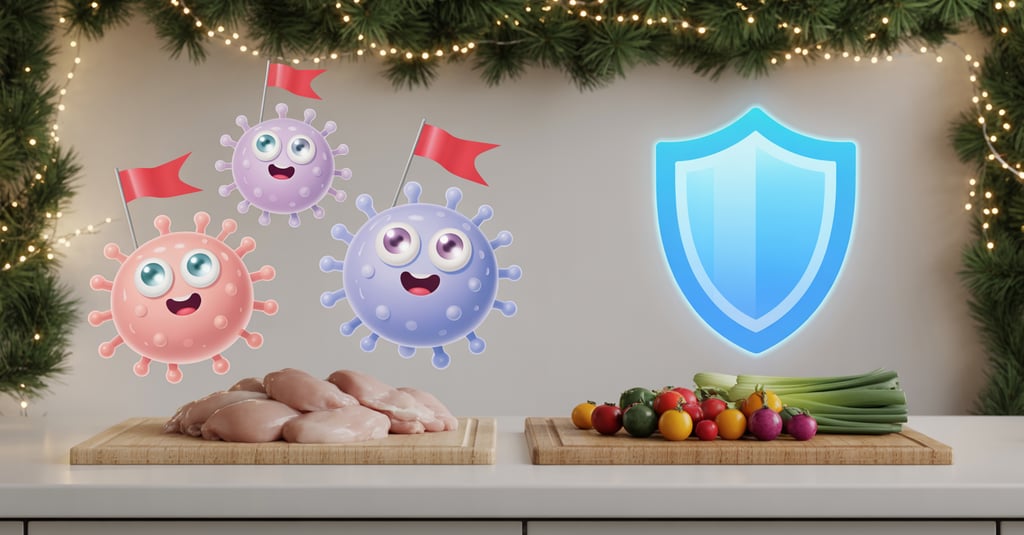
With so many dishes in motion, cross-contamination becomes one of the biggest holiday risks. It happens when bacteria from raw foods (especially raw meat) transfer onto cooked or ready-to-eat foods.
Avoid cross-contamination by:
Using separate cutting boards for raw meat and vegetables.
Cleaning knives and surfaces between each use.
Never placing cooked meat back on the plate that held raw meat.
Storing raw items on the bottom shelf of the refrigerator.
A little extra caution makes your holiday kitchen safer for everyone.
6. Store Leftovers Quickly and Correctly
Leftovers are one of the best parts of Christmas - turkey sandwiches, chocolate desserts, and warming soups the next day. But storing them correctly is essential.
Leftover safety rules:
Refrigerate leftovers within 2 hours.
Divide large dishes into smaller containers for quicker cooling.
Eat refrigerated leftovers within 3 days.
Freeze any extra food you won’t use soon.
Reheat leftovers to at least 75°C (167°F).
Never reheat leftovers more than once. Repeated cooling and reheating increases bacterial growth.
7. Holiday Baking: Don’t Taste Raw Dough or Batter
Christmas cookies, gingerbread houses, cupcakes, and festive cakes are everywhere in December. But many recipes include raw eggs or raw flour, which can carry harmful bacteria.
Safety tips for holiday bakers:
Don’t taste raw cookie dough or cake batter.
Keep young children away from raw dough.
Chill dough in the refrigerator, not on the counter.
Bake desserts fully to safe internal temperatures.
Refrigerate cream-filled pastries, cheesecakes, and frostings.
Even sweets can cause illness when handled improperly - but safe baking still tastes just as delicious.
8. Keep Holiday Kitchens Clean and Clutter-Free
During Christmas, kitchens get decorated, counters fill with ingredients, and guests often wander in to “help.” A cluttered kitchen can increase the risk of cross-contamination and accidental spills.
Holiday cleaning tips:
Remove decorations from food-preparation areas.
Wipe down surfaces often with hot soapy water.
Keep pets out of the kitchen while cooking.
Refresh dishcloths or sponges daily - bacteria grow fast in them.
Empty rubbish bins before they overflow.
A clean, organized kitchen helps you cook comfortably and safely.
9. Safely Handle Homemade and Gifted Foods
Christmas often brings handcrafted jams, baked goods, or sweets from friends and neighbors. These can be wonderful gifts - but they may not always follow strict food safety practices.
How to stay safe:
Store gifted foods according to instructions (if none given, err on the safe side).
Refrigerate anything with dairy, eggs, or fresh fruit.
If something smells off or looks spoiled, don’t take risks.
Label homemade foods you give to others with storage instructions.
Food gifts are lovely, but they should always be handled responsibly.
10. Special Considerations for Vulnerable Guests
If elderly relatives, pregnant guests, small children, or anyone with a weakened immune system is attending your Christmas gatherings, extra care is important.
Serve only fully cooked foods to these guests.
Avoid raw seafood, undercooked meats, soft cheeses made from unpasteurized milk, and raw eggs.
Double-check fridge temperatures (should be 4°C / 40°F or lower).
Keep buffet lines short so food doesn’t sit out.
Keeping these guests safe ensures everyone enjoys the festivities.
11. Don’t Forget Drinks and Festive Beverages
Many holiday drinks contain dairy, eggs, or fresh fruit - all of which require proper handling.
Eggnog safety tips:
Use pasteurized eggs or store-bought eggnog.
Keep eggnog refrigerated and chilled when serving.
Don’t let dairy-based beverages sit out too long.
Hot chocolate safety:
Keep milk-based drinks above 60°C (140°F).
Store leftover hot chocolate in the fridge as soon as it cools.
Festive drink safety is often overlooked, but it’s just as important.
12. Make Christmas Safe, Merry, and Memorable
Food safety may not be the most glamorous part of the Christmas season, but it is one of the most important. With thoughtful preparation, clean habits, safe cooking temperatures, and proper storage, you can protect your family and guests while still enjoying all the richness and joy of holiday traditions.
A safe Christmas kitchen means:
Fewer chances of foodborne illness
More time enjoying loved ones
Stress-free hosting
Confidence in every dish you prepare
By following these simple but powerful tips, you’ll keep your celebrations merry, bright, and delicious - just as the holidays should be.
Stay informed!
Subscribe to get the latest food safety tips!
© 2025. All rights reserved.
hello@foodsafetybase.com