
5 Fun Ways to Teach Kids Healthy Habits: The Ultimate Handwashing Guide
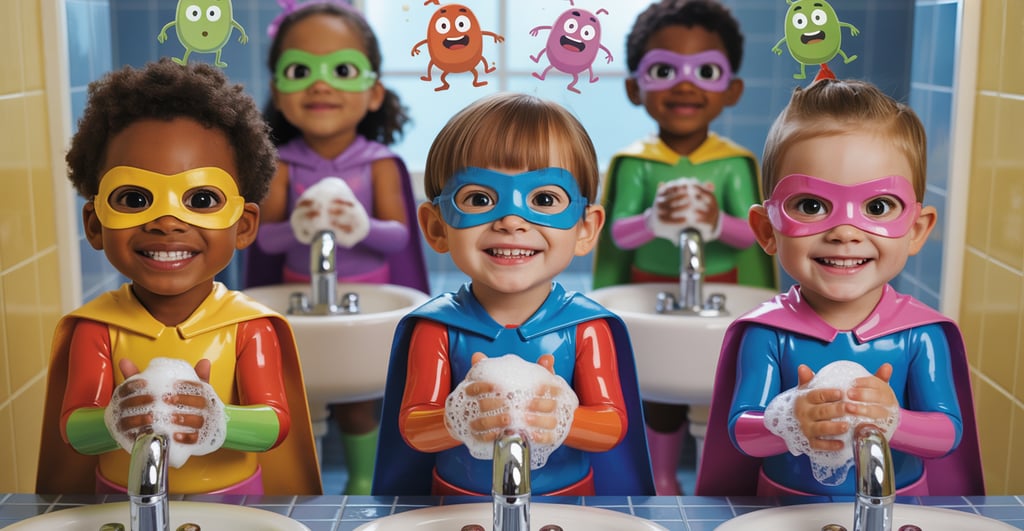
Handwashing is more than just a routine; it is arguably the simplest, most effective, and most profound defense we have against infectious diseases. For parents and caregivers, the goal isn't just to get hands clean now, but to instill a lifelong, automatic habit of hygiene. However, asking a hungry, tired, or distracted child to stop their momentum and scrub for 20 seconds can feel like an impossible battle. Children don't naturally grasp the concept of microscopic germs-if they can't see it, it's not a threat. The solution is to flip the script: remove the "chore" and inject "play." When you transform handwashing into a game, a silly ritual, or a personalized routine, kids become enthusiastic participants rather than reluctant complyers. Here is a comprehensive guide, including five fun, actionable strategies, to make the sink their favorite stop before every meal.
10/23/20255 min read
The Core Concept: The Science of 20 Seconds
The reason doctors and scientists harp on the 20-second rule is simple: it takes time for the surfactant molecules in soap to latch onto and break down the lipid (fatty) membrane that holds viruses and bacteria together. A quick rinse simply washes off loose dirt; 20 seconds of lather and friction destroys the pathogens.
The challenge is measuring that time.
1. The 20-Second Sing-A-Long Rule
Music is the perfect, no-stress timer. It keeps hands scrubbing until the very last note.
The Classic: The most common benchmark is singing "Happy Birthday" twice. It's universally known and takes almost exactly 20 seconds at a normal pace.
The Custom Jingle: Create a short, personalized song about scrubbing away "icky bugs." Tailor it to your child's interests. If they love dinosaurs, make it the "T-Rex Scrub Song." If they love space, try the "Rocket Launch Countdown."
Example Lyric Idea: "Lather, lather, everywhere, scrub the fingers, scrub the thumb, send the little germs to their doom!"
The Visual Timer: If your child is highly kinetic and doesn't want to stop moving to sing, use a visual aid. A fun, brightly colored sand timer (designed for teeth brushing or play) placed right next to the sink is a fantastic, non-verbal cue. The rule is simple: hands stay soapy until the sand runs out.
2. The Glitter Germ Game: Visualizing the Invisible
Because kids are concrete thinkers, they need to see the problem to understand the solution. Glitter is a perfect, tangible stand-in for invisible germs.
The Setup: Before starting, secretly dab a small amount of petroleum jelly on their hands, then sprinkle it with craft glitter (call it “super-sticky germs”). Alternatively, use a few drops of washable, colorful paint.
The Lesson 1: Water Alone: Have them try to rinse the "germs" off with just water. They will quickly see the glitter just moves around, sticks to other parts of their hands, or remains trapped in the creases.
Takeaway: Water can't dissolve the sticky membrane—it only moves it.
The Lesson 2: Soap and Friction: Have them apply soap and create a proper lather. When they start rubbing their palms, the soap breaks the surface tension and the friction pulls the glitter (and the jelly) away completely.
Expansion: The Pepper Experiment: For older kids (age 5+), use the classic "pepper and dish soap" experiment in a bowl of water. Sprinkle pepper (germs) on the water's surface. When they touch the center of the water with a finger dipped in soap, the pepper instantly scatters to the edges. This demonstrates how soap repels germs.
3. Soap Sculptures and Fun Accessories
Motivation comes from personalization and novelty. If the tools are fun, the job becomes fun.
Foaming Over Bar: Swap out boring bar soap for fun, brightly colored foaming soap. The transformation from liquid to a fluffy foam is tactile and instantly more appealing.
Soap Toys: Invest in novelty soaps with small, colorful plastic toys embedded inside. The child's mission is to wash the soap down to free the toy. This provides a goal-oriented reward that encourages thorough scrubbing.
The Personalized Station: Give them ownership of their area. This includes:
A unique, bright, kid-sized hand towel with their favorite cartoon character or animal.
A colorful step stool that is stable and allows them to reach the sink comfortably without straining. Independence is key!
A small, shatterproof mirror at their height, which helps them see what they are doing and adds an element of "grown-up" self-awareness.
4. The Handwashing Super Chart: Positive Reinforcement
Positive reinforcement is far more effective than nagging. You are rewarding the desired behavior (washing hands before a meal) and not just the result.
Create the Chart: Design a simple, attractive chart (either a printable digital template for easy use) that includes the days of the week and spaces for key washing moments: Before Breakfast, Before Lunch, Before Dinner, After Outside Play, After Toilet.
Sticker Power: Every time they successfully complete a pre-meal wash without being prompted, allow them to place a bright sticker, a checkmark, or draw a star on the chart.
Focus on Consistency: Make sure the reward system is about consistency, not perfection. If they miss one wash, they can still earn their goal by nailing the next ten.
The Non-Food Reward System: Set a goal (e.g., 20 stickers in a week) and offer small, experiential, or privileged rewards, such as:
Picking the movie for Family Movie Night.
Getting an extra ten minutes of bedtime story reading.
Choosing the menu for a family dinner.
A trip to the park or a favorite playground.
Psychology Tip: Frame the wash as "fueling up" for the activity, not interrupting it. "Let's wash up so your tummy is ready to welcome that delicious pancake energy!"
5. The Handwashing Choreography: Hitting the Missed Spots
The majority of germs hide in the crevices that a simple palm-to-palm scrub misses: under the nails, between the fingers, and the backs of the hands. Turn the necessary technique into a quick, four-step sequence of exaggerated "ninja" moves.
Call this the "Germ-Busting Moves" or the "Super Scrub Dance."
Step Simple Instruction
1. The Clap: Rub palms together hard to make big bubbles (lather).
2. The Flip-Flop: Rub the top of your hand with the opposite palm- don't forget the thumbs! Switch hands.
3 The Basket: Weave your fingers together and scrub the webs in between them.
4 The Fingertip Clean: Rub your fingertips into the center of the opposite palm to clean under your nails. Switch.
Practice this sequence until the movement is automatic. The goal is muscle memory - they shouldn't have to think about where to scrub, just when to start the dance.
Beyond Mealtime: When Washing Matters Most
While the pre-meal scrub is critical, consistency is built by establishing handwashing at other high-risk moments throughout the day.
The Absolute Must-Wash Moments
After using the toilet. (The most obvious and important!)
After touching pets or animals.
After coughing, sneezing, or blowing the nose.
Before and after preparing or handling food.
Immediately after returning home from school, the park, or the store.
After handling garbage.
Before touching a wound or cut.
For toddlers, pair the washing moment with the preceding activity. For instance, when they flush the toilet, the phrase is immediately, "Flush, wash, dry! That’s how we fly!"
Troubleshooting Common Handwashing Resistance
Even with the best games, parents sometimes hit roadblocks.
1. The Low Sink Dilemma
If the sink is too high, the child is uncomfortable, which leads to splashing and rushing.
The Fix: Invest in a sturdy, non-slip two-step step stool. The second step provides a more stable, higher platform, allowing them to lean over the basin comfortably and control the water better.
2. The Water Temperature Debate
Children are sensitive to temperature. If the water is too cold or too hot, they will pull their hands away quickly.
The Fix: Use only lukewarm water. Explain that the soap does the work, not the heat. Let them feel the temperature first and confirm it's "just right."
3. The Towel Resistance
If their hand towel is rough or scratchy, they will try to shake their hands dry, which is ineffective and messy.
The Fix: Use ultra-soft, microfibre towels. The final step-the drying-is just as important as the wash. Teach them to pat dry, not rub, to keep their skin healthy.
The Power of Modeling: You Are Their Coach
The single most effective tool for teaching healthy habits is your own example.
Be Visible: Wash your own hands visibly and enthusiastically alongside your child. If you're cooking dinner, announce, "Okay, I need to use the Germ-Busting Moves now!"
Talk It Up: Narrate the process. "Wow, I used the Interlace move really well today. I bet I got all the germs out from between my fingers!"
Acknowledge Slip-Ups (Yours and Theirs): If you forget to wash, calmly say, "Oops! Mommy forgot her Super Scrub Dance before handling the bread. Let's fix that right now." This normalizes mistakes and models how to correct them without shame.
By turning the bathroom into a learning laboratory, the sink into a stage, and the soap into a superhero's shield, you are doing more than just encouraging clean hands-you are consistently teaching your kids a foundational lesson in health, self-care, and independence that will serve them for the rest of their lives. A few minutes of fun now will pay off in years of better health later!
Ready to try the Super Scrub Dance? Let me know if you’d like me to draft a fun, 20-second jingle to go along with the "Germ-Busting Moves" choreography!
Stay informed!
Subscribe to get the latest food safety tips!
© 2025. All rights reserved.
hello@foodsafetybase.com